Skip to content
Fzt. Bilal KaraFizyoterapi & Rehabilitasyon

Neck (Cervical) Disc Herniation Treatment

Desk work and long hours on a phone have made neck herniation and loss of the neck's natural curve far more common. Fzt. Bilal Kara works on cervical problems along two lines: bringing pain under control and re-educating posture.

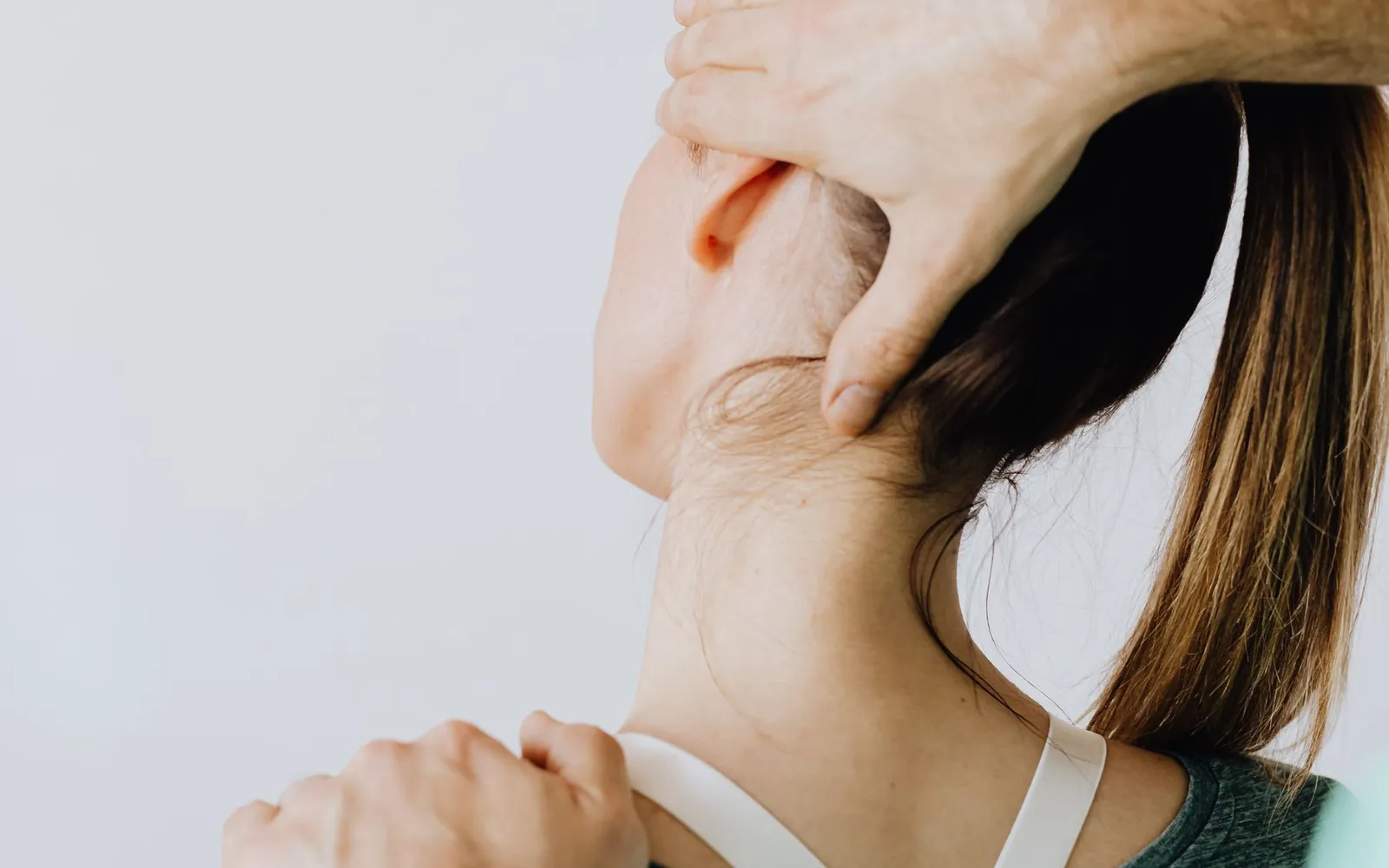
A manual therapy technique applied to the neck

When is it needed?

  • Neck-upper back pain appearing during or after training
  • Tightness that stands out in overhead movements (lifts, throws)
  • Stiffness that temporarily eases with stretching but keeps recurring
  • Fatigue and heaviness around the shoulder blade
  • Occasional numbness in the arm or hand
  • Increasing neck stiffness after long training sessions

What we do

  • Scapular (shoulder blade) control and upper-body posture assessment
  • Strength testing of the upper back, shoulder girdle and deep neck muscles
  • Graded, measurable strengthening programme in the gym
  • Short-term relief with manual therapy during a painful phase
  • Training-specific posture and load-management education
  • Regular tracking of strength and range of motion

Neck Herniation in Bursa Nilüfer

Fzt. Bilal Kara provides one-to-one care for neck herniation at the clinic in Bursa Nilüfer — in Fethiye Mahallesi, on Kelebek Sokak, at a central point of Nilüfer, opposite the Fethiye covered market.

It is a short trip by car or public transport from İhsaniye, Odunluk, Balat, Özlüce, Ataevler, 23 Nisan and the surrounding areas. Every session is one-to-one, assessment-based and tailored to you.

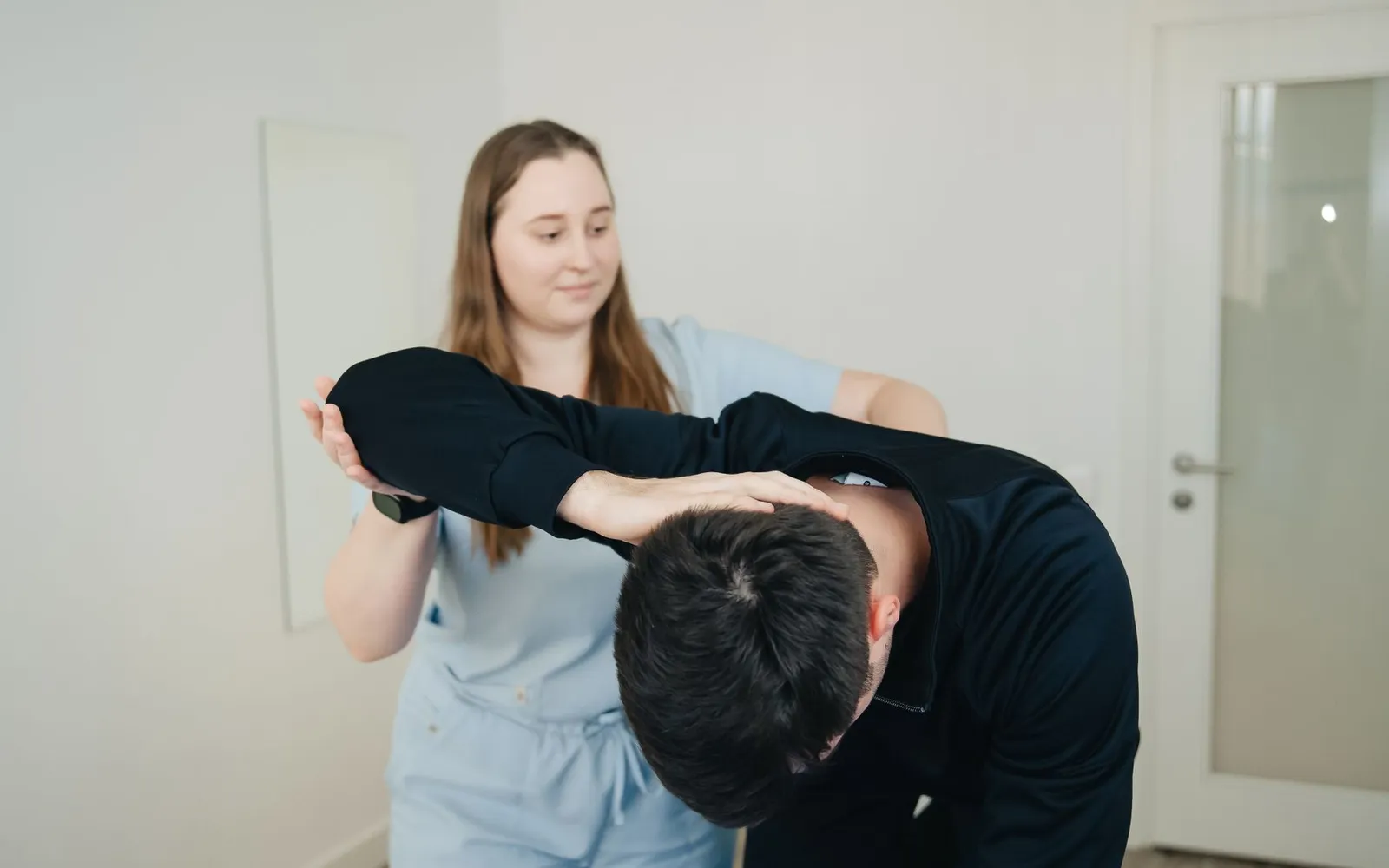
If stretching relieves it in the moment but it doesn't last

A neck complaint often doesn't start in the neck. If the muscles that stabilise the shoulder girdle are weak, the load shifts upward; stretching gives temporary relief, and the complaint returns within a few days.

Fzt. Bilal Kara centres the programme on the area around the shoulder blade and the back muscles. A measurable strength programme in the gym increases the upper body's load-carrying capacity, freeing the neck from a load that was never its own to carry. Load is kept low during a painful phase; rest is not the preferred option.

Why isn't stretching alone enough?

Stretching relieves a tight muscle in the moment but doesn't change why it stayed tight. In most cases the real cause is that the muscle is carrying more load than it should — usually because a weak shoulder girdle and upper back have handed their load over to the neck.

That's why Fzt. Bilal Kara doesn't present stretching as a solution on its own; it provides short-term relief as part of a strengthening programme.

Why is scapular control central?

The shoulder and neck region can't move healthily unless the shoulder blade sits in the right position. Poor scapular control causes load to shift onto the neck during training and leads to recurring tightness.

That's why the programme starts not directly with the neck, but with scapular stabilisation and upper-back strength; the neck only truly relaxes once it's freed from a load that isn't its own.

Surgery or physiotherapy?

Most neck herniation complaints are managed with a non-surgical programme based on exercise and manual therapy; surgery comes up only in selected cases with a progressing neurological sign.

AspectPhysiotherapy (non-surgical)Surgery
Who it is forMost cases without an urgent sign, aiming to return to trainingProgressing weakness/loss of dexterity in the arm, gait instability
GoalReduce neck load through scapular and upper-back strengthSurgically relieve pressure on the nerve/spinal cord
ProcessGraded strengthening with gym follow-upSurgery followed by rehabilitation
Who decidesPlanned from the physiotherapy assessmentNeurosurgeon/spine surgeon or orthopaedic physician
The decision is individual; this table is a general framework.

How does the gym programme progress?

The programme starts with low load and pain-free range of motion; resistance increases gradually as scapular control is gained. Training-specific overhead movements are reintroduced at low intensity once the upper body reaches a certain strength threshold.

When to see a doctor without delay

Progressing weakness in the arm, loss of dexterity in the hands, gait instability, or symptoms spreading into the legs require a physician assessment without delay. If Fzt. Bilal Kara finds such a sign, the referral is made without delay.

5.0 · 20 Google reviews

Book a one-to-one assessment for neck herniation

Fzt. Bilal Kara · Bursa Nilüfer. Share your complaint; we plan the process together after the assessment.

Frequently asked questions

When can I return to training?

Once scapular control and upper-back strength reach a certain threshold, overhead movements are reintroduced at low intensity and gradually; the decision follows measured capacity, not the calendar.

Should I stop doing stretches?

No, stretching stays part of the programme; but it isn't enough on its own and only makes sense together with strengthening.

Do gym exercises increase neck pain?

Not with the right load and technique; exercises start below the pain threshold and progress gradually.

How is scapular control tested?

The path the shoulder blade follows during arm movements is observed; any shift or an incorrect muscle pattern kicking in early is noted during assessment.

Further reading

Independent, authoritative health sources. For information only; not a substitute for medical advice.

Other treatments

  • Stiff Neck

    For a neck that suddenly locks: fast relief in the acute phase, then work aimed at preventing recurrence.

  • Straight Neck

    Assessment that reads the X-ray finding correctly, plus exercise targeting the deep neck muscles.

  • Manual Therapy

    Hands-on techniques applied to joints and soft tissue, combined with exercise for a result that lasts.

Articles on this topic

Book an appointment for Neck Herniation

To book, message us on WhatsApp or call; you do not need to write health details, they are discussed in person.

Book an appointment