Skip to content
Fzt. Bilal KaraFizyoterapi & Rehabilitasyon

Herniated Disc (Lower Back) Treatment

A herniated disc occurs when the disc between two vertebrae shifts and presses on a nerve root; for most people it shows up as back pain, pain travelling down the leg, or numbness. Fzt. Bilal Kara approaches lumbar disc herniation in Bursa Nilüfer by first assessing where the pain actually comes from, then building an exercise programme around that finding.

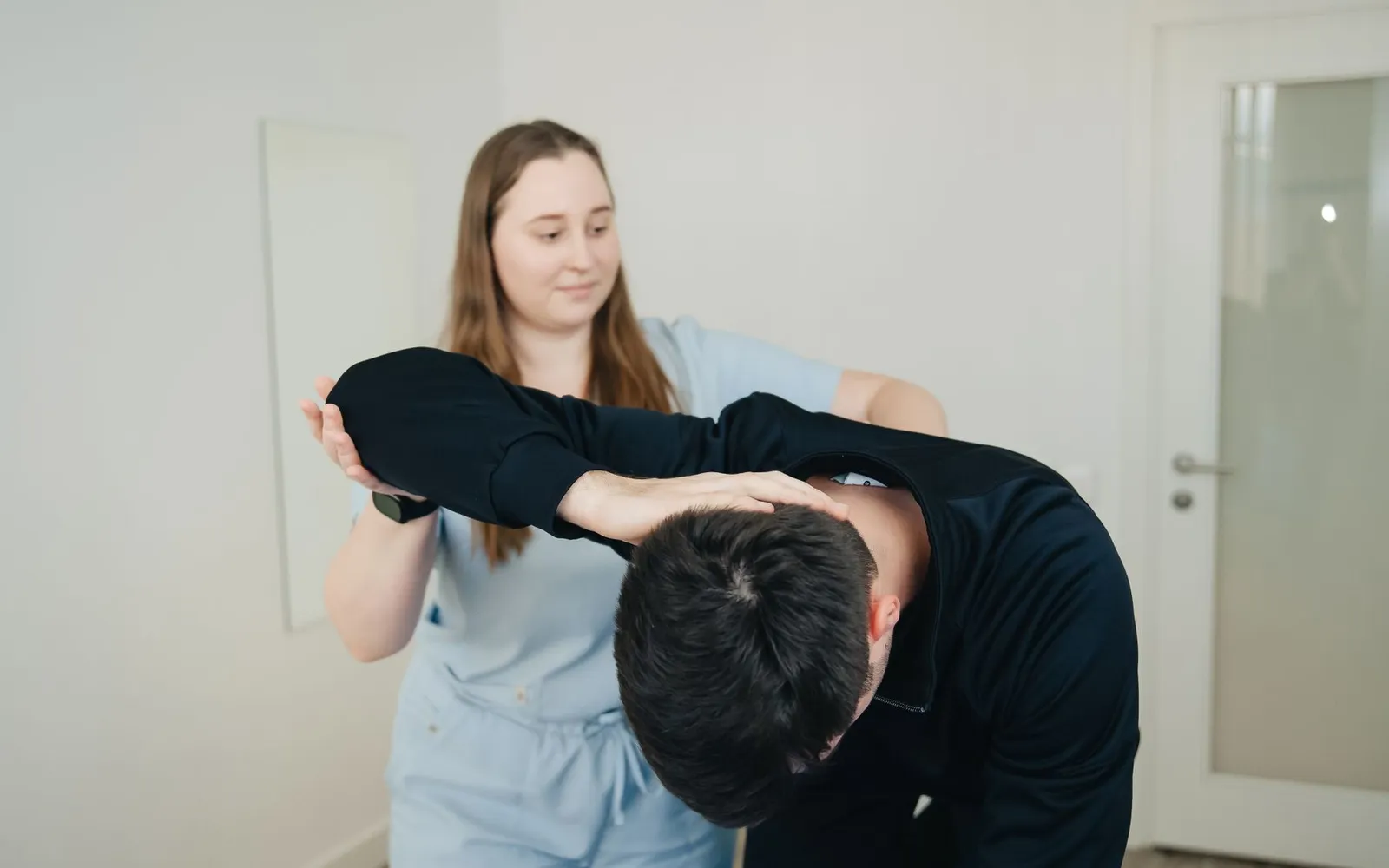
Exercise and manual therapy applied to the lower back

When is it needed?

  • Lower back pain that stands out during training or heavy lifting
  • Pain spreading from the hip into the leg, triggered by exercise
  • Numbness or tingling in the foot or leg
  • A sense of lost strength or control during squatting and lifting movements
  • Symptoms that worsen with long sitting or driving
  • Hesitation under heavy load even after the pain has gone

What we do

  • Movement and load assessment: which movement triggers it, which load is safe
  • Manual therapy and electrotherapy to manage pain in the acute phase
  • An exercise programme running from core stabilisation up to graded loading
  • Re-teaching fundamental movement patterns such as squatting, hip hinging and carrying
  • Measured, gradual reintroduction of training-specific movements
  • Load increases in the gym under supervision, based on measurement

Herniated Disc in Bursa Nilüfer

Fzt. Bilal Kara provides one-to-one care for herniated disc at the clinic in Bursa Nilüfer — in Fethiye Mahallesi, on Kelebek Sokak, at a central point of Nilüfer, opposite the Fethiye covered market.

It is a short trip by car or public transport from İhsaniye, Odunluk, Balat, Özlüce, Ataevler, 23 Nisan and the surrounding areas. Every session is one-to-one, assessment-based and tailored to you.

The real risk starts after the pain is gone

Most recurrences of a herniated disc happen during the period after symptoms have settled. In the painful weeks, the core muscles weaken quickly; feeling better, the person returns to their old life, but the back can no longer carry what it used to.

Fzt. Bilal Kara dedicates the second half of the programme to closing that gap. In the clinic's exercise gym, loading is increased gradually from a measured starting level; movements actually used in daily life — squatting, hip hinging, carrying — are re-taught under safe load. The measure is not being pain-free, but staying pain-free under load.

Why shouldn't you return to your old load as soon as pain eases?

When pain reduces, the core muscles have not yet returned to their previous capacity; returning to the old training load in that gap exposes tissue that is now more vulnerable than it was the first time it was strained. Most recurrences happen in exactly this window.

That's why Fzt. Bilal Kara doesn't treat "pain gone" as "job done" — the real programme begins once pain has eased, aiming to raise capacity above its previous level.

Surgery or physiotherapy?

The large majority of herniated discs are managed with an exercise-based, non-surgical programme; surgery is considered only in selected cases with a progressing neurological sign, and the decision belongs to the physician.

AspectPhysiotherapy (non-surgical)Surgery
Who it is forMost cases without an urgent sign, aiming to return to sportSelected cases such as progressing weakness or loss of bladder/bowel control
GoalRelieve pain and prepare the core for its previous training loadSurgically relieve pressure on the nerve
ProcessGraded loading, progressing over weeks with gym follow-upSurgery followed by rehabilitation again
Who decidesPlanned from the physiotherapy assessmentNeurosurgeon/spine surgeon or orthopaedic physician
The decision is individual; this table is a general framework.

How is a graded return to training planned?

Return doesn't happen in one step: first pain-free core stabilisation, then basic lifting patterns at low load, then a gradual increase in weight, and only at the end, training-specific movements.

Moving to the next stage happens only once the previous load has been shown to be tolerated without pain and with good control — following the body's response, not the calendar.

When to see a doctor without delay

Loss of bladder or bowel control, numbness in the inner thighs and around the perineum, inability to lift the ankle upward, or rapidly increasing leg weakness all require urgent assessment. If Fzt. Bilal Kara finds such a sign during assessment, the physician referral is made without delay.

5.0 · 20 Google reviews

Book a one-to-one assessment for herniated disc

Fzt. Bilal Kara · Bursa Nilüfer. Share your complaint; we plan the process together after the assessment.

Frequently asked questions

My pain is gone — can I return to full training?

Pain going away doesn't mean the core can carry its old load again. Capacity is increased through a graded loading programme with measurement; a return to full strength comes at the end of that process.

Which movements should I avoid completely?

Usually none are permanently banned; technique and load are adjusted temporarily based on assessment and increased gradually.

Why does training in the gym make a difference?

Graded loading with real equipment, done under supervision, is more measurable than general exercises done at home and prepares you more directly for a return to training.

How long before I'm back to my old training routine?

It varies by person, by the size of the herniation and by how consistently the programme is followed; the return becomes clearer as graded-loading tests are passed.

Further reading

Independent, authoritative health sources. For information only; not a substitute for medical advice.

Other treatments

  • Sciatica

    For pain travelling from the back into the hip and leg: assessment that identifies the source, then graded exercise.

  • Low Back Pain

    For back pain that persists without a clear imaging finding: a programme that looks for the source.

  • Manual Therapy

    Hands-on techniques applied to joints and soft tissue, combined with exercise for a result that lasts.

Articles on this topic

Book an appointment for Herniated Disc

To book, message us on WhatsApp or call; you do not need to write health details, they are discussed in person.

Book an appointment