Herniated Disc in Athletes: Which Department Should You See?
Fzt. Bilal Kara · 6 September 2026 · 2 min read
Fzt. Bilal Kara · 6 September 2026 · 2 min read
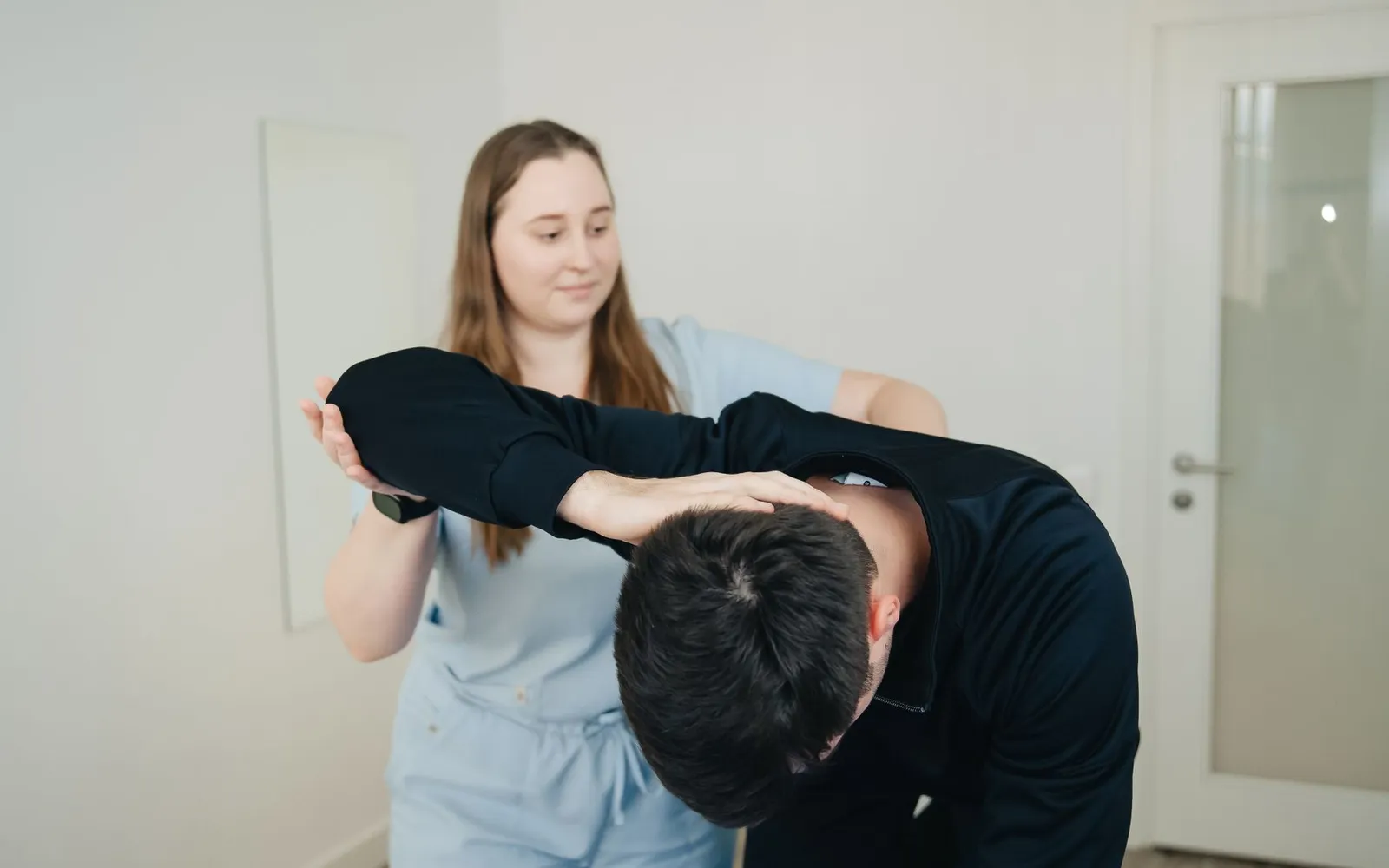
"Which doctor should I see for a herniated disc?" is one of the most common questions. The answer isn't a single department; it depends on the clinical picture.
When someone who's actively training says "I have a herniated disc," two questions come up at once: which department to see, and what happens to training? The short answer: there's no single right department, but most herniated discs aren't an emergency and are managed without surgery — and training usually isn't stopped entirely, it's adjusted.
The large majority of herniated discs are not an emergency and improve without surgery. The word "hernia" on an MRI report doesn't on its own mean urgency or surgery; a hernia is also seen on the MRI of a portion of healthy athletes with no complaints at all.
If there's no red flag: first a PM&R or physiotherapy assessment → the source of the pain and any nerve findings are clarified → instead of a full break from training, usually a modified programme is applied (movements that reduce load and don't cause pain) → if the condition progresses, surgical assessment.
Loss of bladder/bowel control, saddle-area numbness, foot drop or rapidly increasing leg weakness: skip comparing departments, go straight to the ER.
If there's no red flag, either is a suitable starting point; a physiotherapy assessment will refer you to a physician if needed.
In most cases, noticeable improvement is seen within weeks; the duration depends on the size of the hernia and how consistently the programme is followed.
Fzt. Bilal Kara assesses a herniated disc in athletes in person; runs the safe training-adjustment and graded return plan directly. You can find more detail on herniated discs here.
Orthopaedics and Rehabilitation
Chiropractic and manual therapy are often confused. Both are done with the hands, but their approaches and frameworks differ.
6 September 2026 · 2 min read
Orthopaedics and Rehabilitation
The sharp heel pain on the first step in the morning is often assumed to be a heel spur. But the real name for this condition is plantar fasciitis, and the two aren't the same thing.
6 September 2026 · 2 min read
Orthopaedics and Rehabilitation
Flat feet aren't a disease in most people and cause no complaint. The real question is whether they're leading to a problem.
6 September 2026 · 2 min read
An exercise-based, one-to-one physiotherapy programme for back pain and pain radiating into the leg.
For back pain that persists without a clear imaging finding: a programme that looks for the source.
For pain travelling from the back into the hip and leg: assessment that identifies the source, then graded exercise.