What Are the Return-to-Play Criteria After ACL Surgery?
Fzt. Bilal Kara · 20 August 2026 · 2 min read
Fzt. Bilal Kara · 20 August 2026 · 2 min read
The number of months since surgery isn't the right measure for returning to play. What actually matters is whether the knee passes a set of measurable tests.
"It's been six months since surgery, I should be able to get back on the field" is one of the most common — and riskiest — misconceptions in ACL rehabilitation. Time is an important reference point, but it isn't enough on its own for the return-to-play decision.
As the graft (the new ligament tissue) matures biologically, it goes through specific stages, and that process varies from person to person. Time is a necessary condition for the graft to mature, but not a sufficient one on its own; what actually decides it is whether the knee passes a set of functional tests.
The operated leg's strength is expected to reach at least 90% of the healthy leg's. This is measured with an isokinetic device or with functional tests such as a single-leg squat. Returning to the field below this threshold noticeably raises the risk of re-injury.
Single-leg hop-for-distance, triple hop and timed hop tests reveal the performance gap between the two legs. A result under 90% compared with the healthy leg is a sign the knee isn't yet ready for sport-specific loads.
Even if the numerical tests come back fine, if the knee collapses inward on landing after a jump (a valgus pattern), that's an independent risk factor for re-injury. Correcting this pattern, assessed through video analysis, is part of the return-to-play decision.
Even when the knee is physically ready, if the athlete doesn't trust the movement (kinesiophobia), it affects both performance and injury risk. This confidence level, measured with standard questionnaires, is an increasingly considered part of the return-to-play assessment.
Even once all criteria are met, the return doesn't happen in one step: the progression moves from guided training, to team training, to competition, in stages. The knee's response is reassessed at every stage.
Fzt. Bilal Kara runs a measurable return-to-play process after ACL surgery in Bursa Nilüfer, using strength, hop and movement-quality tests. You can book an appointment.

Orthopaedics and Rehabilitation
Chiropractic and manual therapy are often confused. Both are done with the hands, but their approaches and frameworks differ.
6 September 2026 · 2 min read
Orthopaedics and Rehabilitation
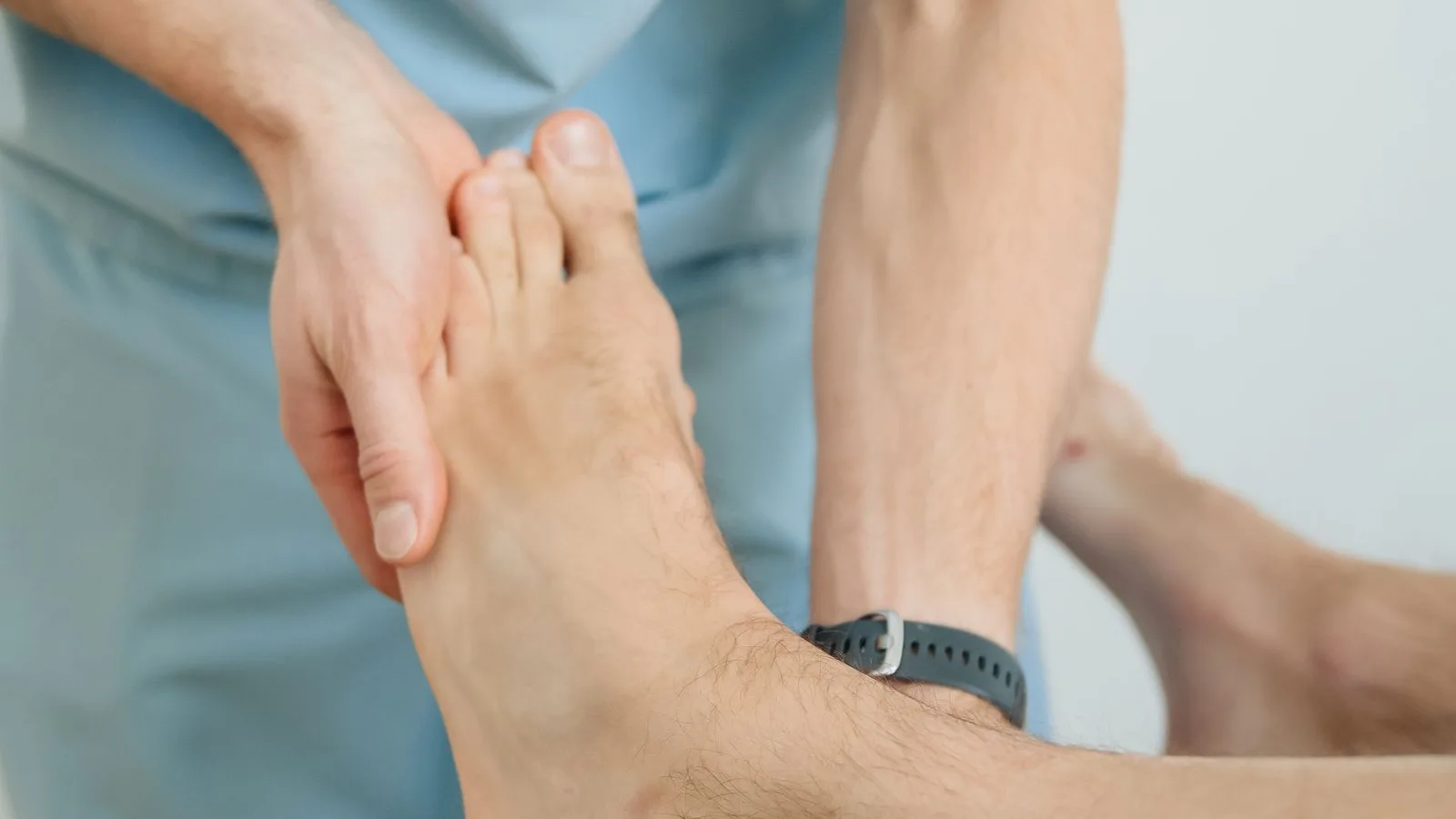
The sharp heel pain on the first step in the morning is often assumed to be a heel spur. But the real name for this condition is plantar fasciitis, and the two aren't the same thing.
6 September 2026 · 2 min read
Orthopaedics and Rehabilitation
Flat feet aren't a disease in most people and cause no complaint. The real question is whether they're leading to a problem.
6 September 2026 · 2 min read
Graded, measurement-based rehabilitation for joint problems and the period after orthopaedic surgery.
Strength-focused rehabilitation for meniscus and ligament injuries, cartilage wear and the period after surgery.
For heel pain that bites on the first step of the morning: shockwave, load management and a graded strengthening programme.